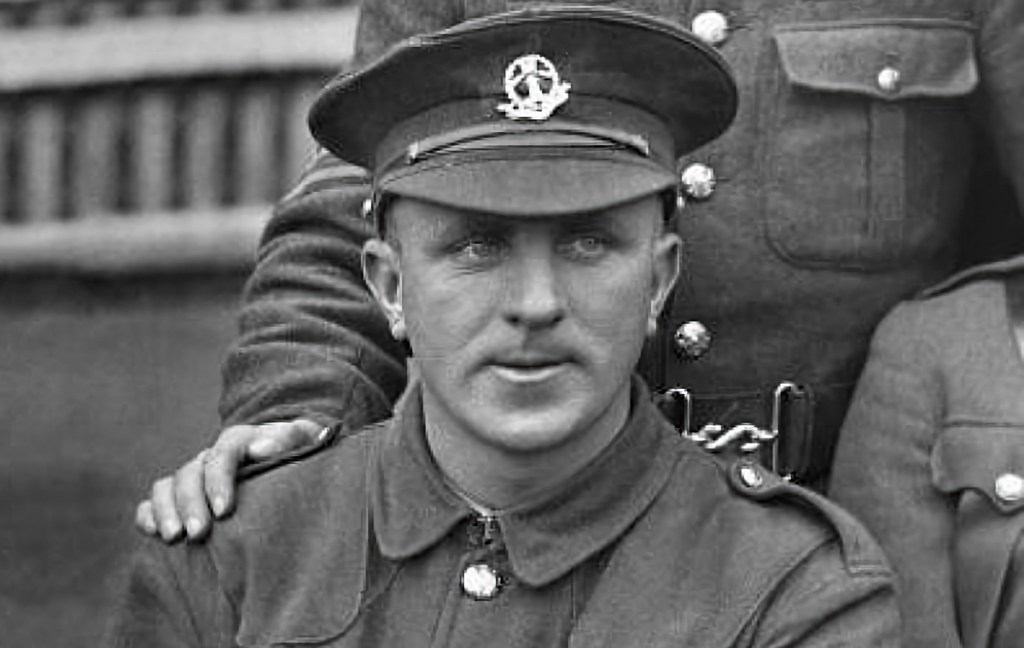
Why Was Patrick Gallacher Called the “Old Spurs Warrior”?
It’s a good question.
Why would someone who played for Tottenham Hotspur for just one season, 1904-05, be remembered as the “Old Spurs Warrior“?
Why not the “Old Barrow Warrior”? After all, Patrick spent four seasons at Barrow AFC, the longest spell of his football career.
He was given the name while he was with the Footballers’ Battalion. For many years, my family had never heard the term. We only became aware of it around 2012, when we discovered the book When The Whistle Blows, which described Patrick’s role with the Footballers’ Battalion during the First World War.
The author wrote:
“Even though there were only about 40 professional footballers still serving with the 17th Middlesex, the battalion team, trained by L/Cpl Pat Gallacher ‘the old Spurs warrior’, was still a formidable one.”
More recently, I discovered the newspaper article from which the description seems to have originated.
In an article published in Athletic News, Private John “Jack” Stephenson’s letter is quoted:
“He also mentions that their trainer is none other than Gallagher, the old ‘Spurs warrior,’ who is like a father to us’.”
Athletic News, 3 July 1917.
I don’t have the answer as to why my Grandfather was called the Old Spurs Warrior, but perhaps I can offer some suggestions.
A Tottenham Connection That Never Ended
One obvious explanation is that, although Patrick played for several clubs after leaving Tottenham, his connection never really ended.
Firstly, “Pat” was in the same Tottenham Hotspur squad as Vivian Woodward, the famous amateur forward and England international. More than a decade later, both men appear together in the 1915 Footballers’ Battalion photograph below, visible evidence that their paths crossed again during the war.
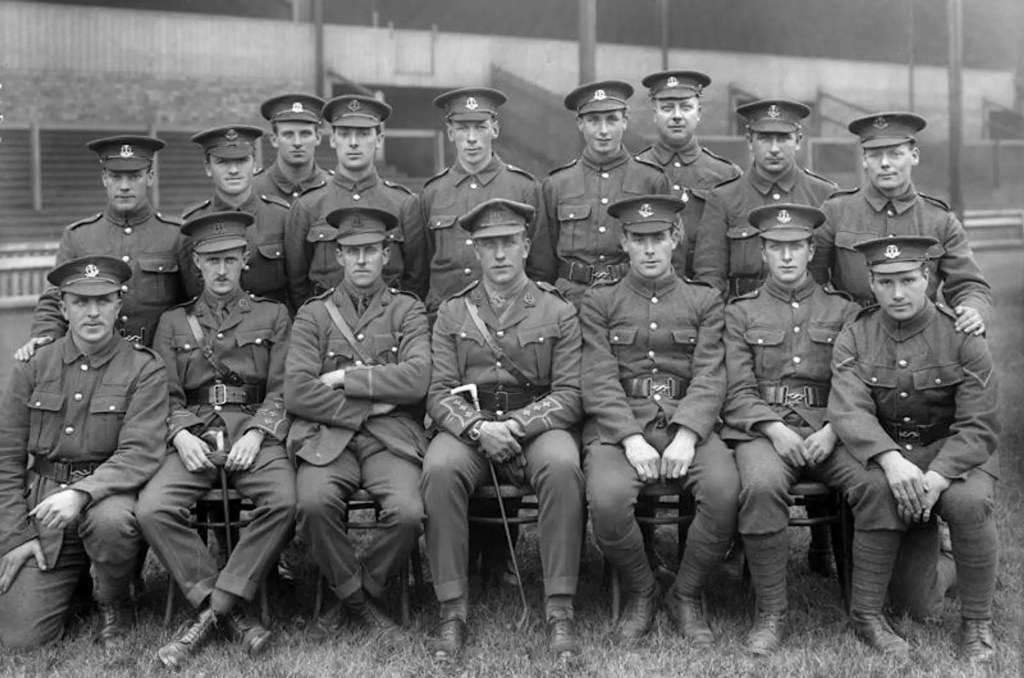
Back row: Sgt Percy Barnfather (Croydon Common), Pte William Jones (Brighton), Pte William Booth (Brighton), Pte George Beech (Brighton), Pte Tommy Lonsdale (Southend United), Sgt Joe Smith (Chesterfield), Sgt Yeoval, Pte Frank Martin (Grimsby Town), Pte Jack Sheldon (Liverpool).
Even after moving to Luton Town, Partick Thistle, Workington AFC, Barrow AFC and Ton Pentre AFC, Tottenham remained his home during the close season.
My father, Terence Gallacher, wrote:
“He was a particular friend of Bill Over who was head groundsman of The Spurs. It is likely that Patrick and Alice would have returned to Tottenham during the summer months and during these visits home, Patrick would have done some work with the Spurs ground staff.”
Bill Over would later become Tottenham Hotspur’s Head Groundsman. At the time, the position was held by his father, John French Over.
Through this work Patrick gained experience that would later prove valuable when he became a groundsman himself.
Home, Family and Tottenham
Tottenham was also where Patrick built his family life.
He met Alice Nicholson while playing for Spurs and, although they married in Luton in September 1906, Tottenham remained a constant presence in their lives.
The family home in Trulock Road became the place to which they repeatedly returned. Their second son, Albert Patrick Gallacher, was born there in 1908.
Beyond Playing Football
After retiring from football, Patrick settled permanently in Tottenham.
In 1923 he worked as a rigger during the construction work that covered the Park Lane and Paxton Road terraces at the Spurs ground. It was work that drew upon the skills he had first learned in the shipyards of Glasgow.
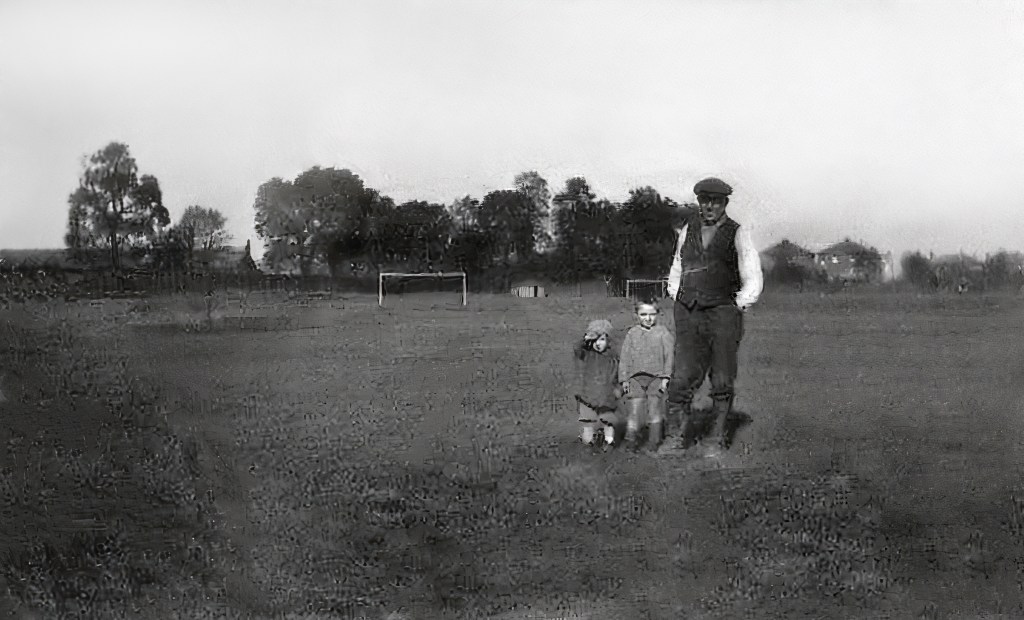
He later became groundsman at the St Ignatius Sports Ground, situated between Trulock Road and Tottenham Hotspur’s East Stand. In later years Spurs players occasionally trained there.
By then, Patrick’s association with Tottenham had lasted far longer than his single season as a player.
A Possible Answer
Perhaps that is why the men of the Footballers’ Battalion knew him as the “Old Spurs Warrior”.
By 1917 Patrick had played for Luton, Partick Thistle, Workington, Barrow and Ton Pentre. Yet Tottenham remained the place he returned to year after year. It was where he met his wife, where he worked during the off-season, where he raised his family and where he would eventually spend the rest of his life.
His friends in the Battalion could not have known what the future would hold. They could not know that Patrick would still be living in Tottenham decades later. Perhaps, however, they could see what seems clear to me now: that my Grandfather had a genuine affection for Tottenham and always regarded it as home.

