Category: Barrow AFC

  • Barrow’s Long Journey to Trowbridge

    Barrow’s Long Journey to Trowbridge

    During Barrow’s 1912/13 season, the club were drawn away to Trowbridge Town in the FA Cup, then commonly referred to as the English Cup. The match was scheduled for 14 December 1912 at Trowbridge’s Flower Show Field.

    Before the tie, Barrow attempted to persuade their opponents to move the match to Holker Street. The Lancashire Evening Post reported that a committee from Barrow AFC offered Trowbridge £100 to switch the venue. Trowbridge declined.

    The decision was understandable. The Wiltshire club anticipated a record attendance and had little desire to surrender home advantage. Travel was also a significant obstacle. The journey from Barrow-in-Furness to Wiltshire covered around 270 miles and, in an era when football teams travelled almost exclusively by train, required careful planning.

    Trowbridge prepared extensively for the occasion. Seats in the covered stand could be reserved for 1s 6d, while additional temporary stands were erected to accommodate the expected crowd.

    A match preview in the Wiltshire Times offered an intriguing glimpse into Barrow’s status at the time:

    “The Barrow team, by their record victory of last week, have returned to the head of the Lancashire Combination table. The Barrow players are all professionals, and the team is one of the highest paid in the Combination.”

    Wiltshire Times, 14 December 1912

    The same newspaper drew particular attention to Barrow captain Patrick Gallacher:

    “He is the heaviest man in the team, ripest in experience. A stalwart defender in every respect, and clean and accurate in his methods.”

    Wiltshire Times, 14 December 1912

    The journey south began on Friday morning. Alongside several directors, the players left Barrow Central Station at 8.45am and arrived in Bath at 5.17pm. Fred Newman, Barrow AFC’s president and proprietor of the Palace Theatre in Barrow, arranged entertainment for the travelling party that evening.

    As the Wiltshire Times reported:

    “The President of the Club, Mr. F. Newman, who is a music hall proprietor in Barrow, is arranging for free seats for the party at the Palace Music Hall, Bath. The visitors will remain at the Francis Hotel, Bath, on Friday night and proceed to Trowbridge about 12.7 on Saturday forenoon, arriving at 12.42. After the match the Barrovians leave Trowbridge at 6.34 p.m. and arrive back in Barrow at 5.35 on Sunday morning.”

    Wiltshire Times, 14 December 1912

    Barrow’s correspondent “Observer” later provided a more colourful account of the evening:

    “On Friday evening, the ‘boys’ were entertained at the Palace Music Hall, this by the kindness of Mr Fairfax, the genial manager, who reserved the front row in the stalls for the visitors.

    By the way, there was a charming comedienne in the programme, namely, Miss Elfie Fay, who with a lady friend motored from Bath to Trowbridge to witness the match.”

    Soulby’s Ulverston Advertiser, 19 December 1912

    A crowd of 3,000, a record for Trowbridge Town, turned out to watch the tie.
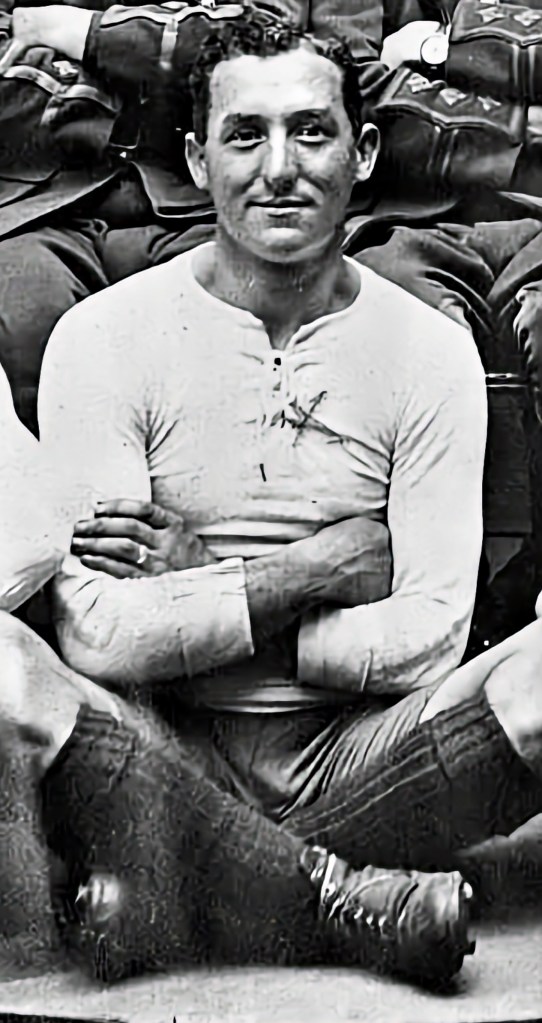
    David Kenny gave Barrow the lead after 17 minutes, but Jack Smart equalised shortly before half-time. According to the Lancashire Evening Post, Trowbridge were ultimately “outclassed” in the second half. Kenny completed a hat-trick and Johnny Woods added a fourth as Barrow secured a convincing victory.

    The newspaper was particularly complimentary about Gallacher’s contribution:

    “The Barrow side was finely led by Gallacher, and the defence was sound. The forwards were clever, and towards the finish they overwhelmed the Trowbridge defence.”

    Lancashire Evening Post, 16 December 1912

    Remarkably, after a 3pm kick-off, the visitors still found time for tea and what was described as a “trot around Trowbridge” before catching their train home at 6.34pm. The return journey involved several changes and a lengthy stop at Crewe before the weary travellers eventually reached Barrow early on Sunday morning.

    “Observer” had the last word:

    “At last we reached Barrow at 5.45 a.m. on Sunday, and our reception consisted of a handshake from one of the directors who had ventured out of bed on this bitter cold morning to greet us on our return. And now for the next round.”

    Soulby’s Ulverston Advertiser, 19 December 1912

    That next round would bring an even greater challenge: Bradford Park Avenue. But that is another story.
  • Why the “Old Spurs Warrior?”

    Why the “Old Spurs Warrior?”

    Why Was Patrick Gallacher Called the “Old Spurs Warrior”?

    It’s a good question.

    Why would someone who played for Tottenham Hotspur for just one season, 1904-05, be remembered as the “Old Spurs Warrior“?

    Why not the “Old Barrow Warrior”? After all, Patrick spent four seasons at Barrow AFC, the longest spell of his football career.

    He was given the name while he was with the Footballers’ Battalion. For many years, my family had never heard the term. We only became aware of it around 2012, when we discovered the book When The Whistle Blows, which described Patrick’s role with the Footballers’ Battalion during the First World War.

    The author wrote:

    “Even though there were only about 40 professional footballers still serving with the 17th Middlesex, the battalion team, trained by L/Cpl Pat Gallacher ‘the old Spurs warrior’, was still a formidable one.”

    More recently, I discovered the newspaper article from which the description seems to have originated.

    In an article published in Athletic News, Private John “Jack” Stephenson’s letter is quoted:

    “He also mentions that their trainer is none other than Gallagher, the old ‘Spurs warrior,’ who is like a father to us’.”

    Athletic News, 3 July 1917.

    I don’t have the answer as to why my Grandfather was called the Old Spurs Warrior, but perhaps I can offer some suggestions.

    A Tottenham Connection That Never Ended

    One obvious explanation is that, although Patrick played for several clubs after leaving Tottenham, his connection never really ended.

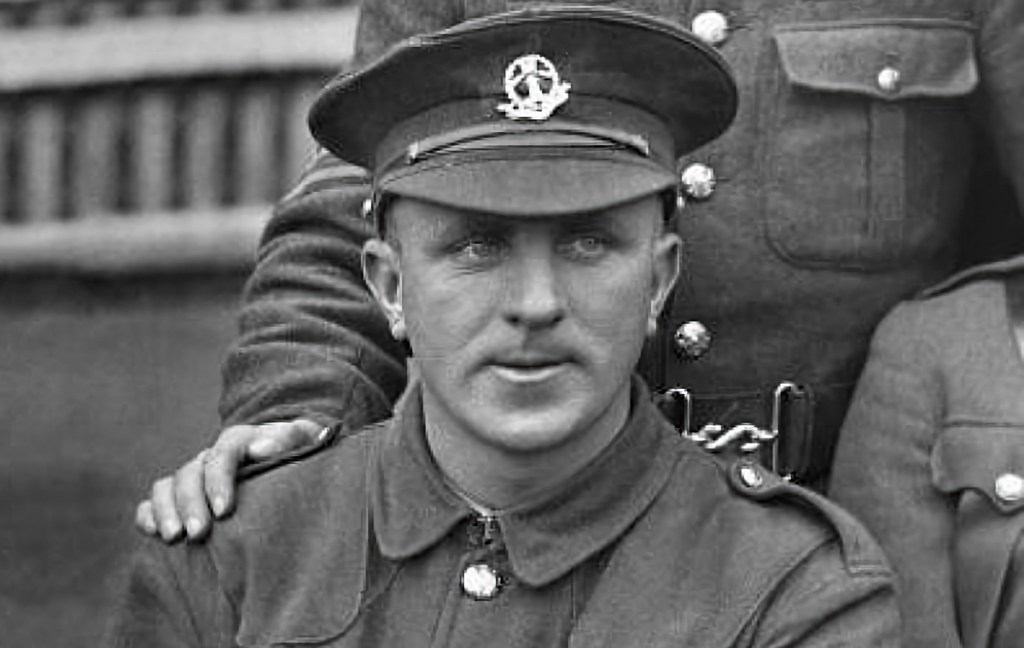
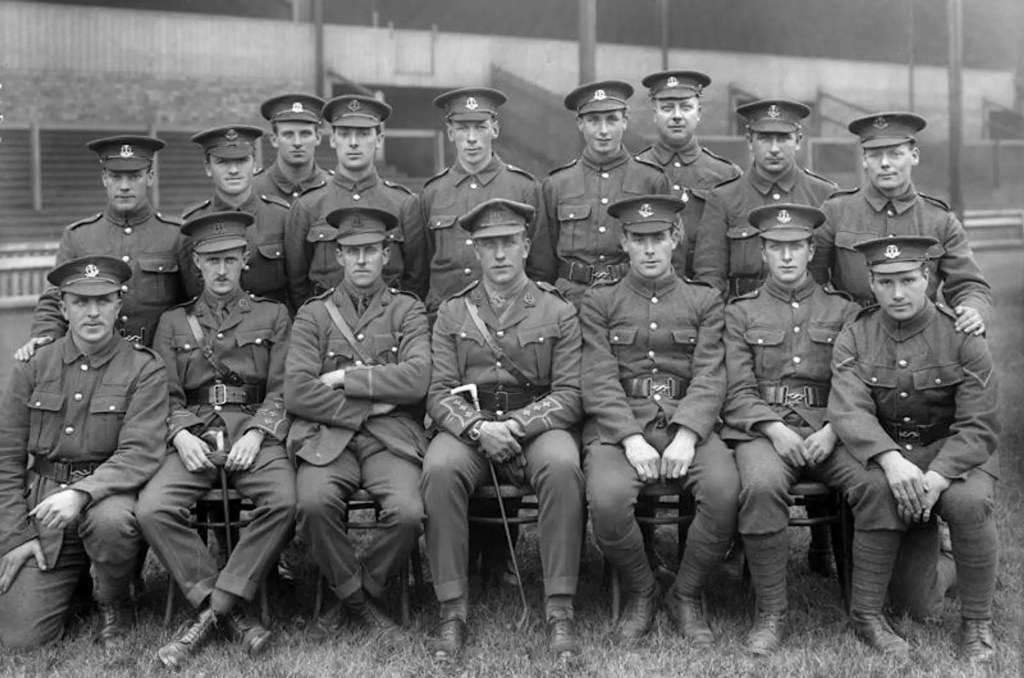
    Firstly, “Pat” was in the same Tottenham Hotspur squad as Vivian Woodward, the famous amateur forward and England international. More than a decade later, both men appear together in the 1915 Footballers’ Battalion photograph below, visible evidence that their paths crossed again during the war.

    Even after moving to Luton Town, Partick Thistle, Workington AFC, Barrow AFC and Ton Pentre AFC, Tottenham remained his home during the close season.

    My father, Terence Gallacher, wrote:

    “He was a particular friend of Bill Over who was head groundsman of The Spurs. It is likely that Patrick and Alice would have returned to Tottenham during the summer months and during these visits home, Patrick would have done some work with the Spurs ground staff.”

    Bill Over would later become Tottenham Hotspur’s Head Groundsman. At the time, the position was held by his father, John French Over.

    Through this work Patrick gained experience that would later prove valuable when he became a groundsman himself.

    Home, Family and Tottenham

    Tottenham was also where Patrick built his family life.

    He met Alice Nicholson while playing for Spurs and, although they married in Luton in September 1906, Tottenham remained a constant presence in their lives.

    The family home in Trulock Road became the place to which they repeatedly returned. Their second son, Albert Patrick Gallacher, was born there in 1908.

    Beyond Playing Football

    After retiring from football, Patrick settled permanently in Tottenham.

    In 1923 he worked as a rigger during the construction work that covered the Park Lane and Paxton Road terraces at the Spurs ground. It was work that drew upon the skills he had first learned in the shipyards of Glasgow.

    He later became groundsman at the St Ignatius Sports Ground, situated between Trulock Road and Tottenham Hotspur’s East Stand. In later years Spurs players occasionally trained there.

    By then, Patrick’s association with Tottenham had lasted far longer than his single season as a player.

    A Possible Answer

    Perhaps that is why the men of the Footballers’ Battalion knew him as the “Old Spurs Warrior”.

    By 1917 Patrick had played for Luton, Partick Thistle, Workington, Barrow and Ton Pentre. Yet Tottenham remained the place he returned to year after year. It was where he met his wife, where he worked during the off-season, where he raised his family and where he would eventually spend the rest of his life.

    His friends in the Battalion could not have known what the future would hold. They could not know that Patrick would still be living in Tottenham decades later. Perhaps, however, they could see what seems clear to me now: that my Grandfather had a genuine affection for Tottenham and always regarded it as home.